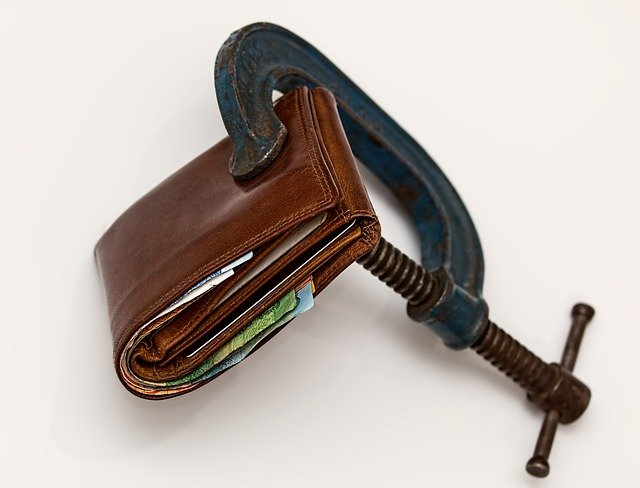
“Debt” is a scary word, especially to young adults. The idea of owing some faceless credit card company or bank money doesn’t sit well with many people. And that fear shouldn’t have you scouring Google for more info about payments, debt collectors, bail bondsmen, and more. As a young adult, right now is when you’re supposed to be learning all about financial responsibility.  Below are 4 tips to get you started down that road.

Understand debt. As a young adult who is just getting started in the world of debt, credit, and payments, it can be hard, and intimidating, to try and understand everything, especially if you’re trying to untangle this knot of information alone. Debt is borrowed money that needs to be paid back.

There are two main ways to pay off debt. The first is in installment payments. This means every month you make a payment to the bank for the same amount of money until your debt is cleared. The other debt payment involves what is called a revolving account. This also requires you to make monthly payments, but payments aren’t fixed, so your payment amount changes with your balance.

Pass on credit cards. As a young adult, you will have credit card offers thrown at you left and right. Every credit card company from here to the moon is going to try to get you to open a card with them. Don’t even open the envelopes when they come in the mail. Just rip them up.

Credit card companies specifically target young adults because young adults haven’t yet had the opportunities to learn all there is to know about financial responsibility. Don’t allow yourself to be taken advantage of by companies offering you something you don’t completely understand.

Be smart about car debt. One of the biggest debt traps young people face is one they throw themselves into when they buy cars. As a society, we tend to be materialistic, so we are rarely content with what we possess. When we buy new cars, they have to be the biggest, fastest, and prettiest.

Even worse is the fact that young adults, especially here in America, will trade in their two or three year old car and take a loan on another new car before the first is paid off. This is what is known as rolling debt. To avoid rolling car debt, buy a car, pay it off, and hang onto it for at least a few years after finishing with payments. That way, you’re debt-free with regard to cars for a few years and you get your money’s worth out of your car purchase.

Don’t be afraid to ask for help. This is the mistake most young adults make when it comes to money. Perhaps they don’t ask for help because they are afraid or because they are too proud. Whatever the cause may be, many young adults make the financial mistakes they do because they do not seek guidance before making a decision.

This could be as easy as asking a parent for their opinion. Many universities also offer financial planning options to students and alumni. You could even pop into the accounting department at work and ask a few questions. Asking a trained professional or someone who’s probably been in your shoes before for an opinion can make all the difference in your financial future. Just remember—it never hurts to ask.

Debt is not a bad thing, though—unnecessary debt is. The above tips will help you avoid some of the common and unnecessary debt that many young adults face. There’s just no need to fall behind financially, especially not during the part of your life when you’re just starting to get ahead.

There was a time in the not so distant past that credit card companies were literally mailing credit cards to almost anyone with a US address. Credit scores were taken into account but they did not hold the weight they should have. As a result, many banks and financial institutions went under during the financial crisis of 2008 and 2009.

Today it is much more difficult to qualify for a credit card and premium credit cards are available to only a select few with a nearly perfect credit history. So what is the relationship between a credit score and the availability of credit cards and how does a personal credit score affect how lenders view your creditworthiness? Here are a few points the team at www.realbusinessrescue.co.uk have put together you may wish to consider.

Take Time to Understand Just What a Credit Score Is

One of the big mistakes which consumers make is in failing to understand exactly what a credit score is. Oftentimes they get a credit score confused with their credit history and this can be a grave mistake. It is true that your credit history plays a big role in determining your final score, it is not the sum total of your score. Your credit history only accounts for a portion of your credit score so it is incumbent upon you to take a few moments to understand how your score is tallied.

Also, it is vital to understand that many lenders do not rely solely on your credit score to determine creditworthiness. Some will take certain types of accounts into consideration and give them more or less weight accordingly. For example, it is widely recognized that banks and other lenders will place less weight on such things as medical bills but will focus on unsecured debt such as other credit cards and personal loans. Even so, you should keep your score sufficiently high to rank at least above 620 if you hope to qualify for any type of credit whatsoever.

Breakdown of Widely Used Fair Isaac Corporation (FICO) Scores

While the Fair Isaac Corporation (FICO) credit score is the most widely used by lenders in the United States, it is not the only credit rating score available. Perhaps 90% of lenders use your FICO score so it makes sense to understand how they rank you and what your score ‘should’ be in order to qualify for credit. First, understand that they use a highly complex formula to calculate credit scores so it would be a huge waste of time trying to do your own computations. Instead, try to focus on the categories that carry greater weight so that you can make improvements to give you the biggest boost quickly.

In effect, a FICO score is comprised of five (5) major categories which include:

  1. Payment/Credit History (roughly 35% of your total score)
  2. Total amount currently owed (roughly 30% of your total credit score)
  3. How long your credit history is (roughly 15%) of the score
  4. Newer credit – recently opened accounts (roughly 10% of your score)
  5. Miscellaneous factors (roughly 10% of the score)

As you can see, your payment history and the amount you currently owe (all totaled) make a huge impact on your FICO credit score. Even if you have a nearly perfect history of paying in full and on time, you may be maxed out based on your income. Bear in mind that lenders will look at this when reviewing your application.

Key Points to Understand When Making Credit Card Applications

Not only will lenders look at the total amount due when deciding whether or not to extend credit to you but they will also look closely at the number of new applications you have made within a given timeframe. Many consumers aren’t aware of the fact that applying for too many credit cards too quickly can raise a red flag. Any lender is likely to ask why that consumer is in such need of credit.

However, there is also the fact that every time you apply for credit a few points will be subtracted from your overall score. Therefore, if you are in the market for a credit card, it is suggested that you research rates and fees before making applications and try to keep all those within a 30 day timeframe. This will indicate that you are looking for a credit card and are shopping around for the best rates. Lenders will take this into consideration if the number of applications and the intervals between them are within an acceptable period.

What to Expect within Pre-Defined Credit Score Ranges

Now that you have a better understanding of how credit card companies view a credit score, what can you expect when shopping around for a new card? The quick answer is that you want a score that is over 720 if you want good interest rates and fees. The lower your score falls, the more apt a credit card issuer will be to charge higher and higher rates and fees. A brief outline of credit ranges would be as follows:

  • Less than 500 – If you can get a credit card it would be a miracle!
  • Between 500 and 579 – Very poor score and while you may get a credit card the interest would be sky high.
  • Between 580 and 619 – Poor credit score but some lenders ‘may’ consider extending credit.
  • Between 620 and 679 – This is an average score and credit is available but rates will not be wonderful.
  • Between 680 and 719 – Quite good credit and this is where you will find decent rates and abundant choices.
  • Between 720 and 800 – Here is where the best interest rates and premium cards will be available.

Of course there are very few people who can actually maintain a credit rating over 720 but it is possible to do! If you are in the market for a credit card and your credit score is less than favorable, it may be in your best interest to seek professional help to repair your credit. Sure, there is a fee but that fee may make the difference between exorbitant interest rates and those which are manageable.

What Credit Score Do I Need To Get A Credit Card

In short, if you are searching for a credit card and your score is lower than 620, it would be wiser to repair your credit before applying or you may find yourself in greater debt than you anticipated. Unless you have a good credit score, your chances of getting good rates are slim to none and that’s the bottom line. Good credit = good rates.


Bio:  Keith Tully is Managing Director of Real Business Rescue, a team of business advisors who specialize in both corporate and individual insolvency.  He enjoys writing about all aspects of finance and credit and helping people to understand sophisticated elements of finance jargon.


Do you save your pocket change, or to spend it?  Sounds like a pretty legitimate question to ask, but have you ever really considered what you are doing with your pocket change?

The other week I was emptying my pockets and like usual I put a handful of change in a jar up on my dresser and the thought crossed my mind how much of change am I throwing away on frivolous expenses.

Whether it’s a cup of coffee or a soda pop, a handful of change does not look like a lot of money, in fact countries like Canada have even stopped making pennies altogether because of production cost.  So I challenged myself to see how much change I typical end up with in a weeks time.

How Much Change Am I Wasting

After a few weeks of watching how much change I put in my change jar I concluded that I actually put between $3 to $4 a week in my change jar on a consistent basis.  That means in an average months time I’ll put around $13 to  $18 of change in my jar, and in a years time that adds up to $156 to $216 I just throw away and spend frivolous junk.

Now a couple hundred bucks still may not sound like much but I could think of a million things it could do for me right now like pay down credit card debt, or help build up my emergency fund but yet this money seems to keep falling through the cracks of our finances.

So what can we do to fix this issue?

What I’m Doing With My Change

penny jarOne thing I’ve been doing for the last 6 or 7 years is that I’ve started a penny jar, and any time I have any pennies in my change or find one just laying on the ground I will put them in my penny jar.  To the left is a picture of my penny jar and what was amazing about this is that I was able to fill it in 5 years and when I cashed it in I had over $80 in it.   That means I would have been throwing away around $16 a year in just pennies alone.

What’s worst is people don’t value pennies like they use to and I feel this is all the more reason to pick them up when you see one just laying around.  However when it comes to nickels, dimes, and quarters those are the coins I feel tend to get abused the most and wasted on stuff we really don’t need to spend it on.

The answer to this is simple.  Determine what you really want spend the money on and save it for that purpose.  With a purpose behind saving the money I feel their is a much better chance it will be used for the right reasons and not on junk. Below is a list of great ideas I’ve seen people use their spare change with over the years.

  • Vacation. On great idea I saw was a family member who used their spare change to go vacation every year.  In fact they would purposely break a dollar when they would buy something so the rest of the change could go towards their annual vacation.  The great thing I like about this idea is that it can always seem like a pain to save money for a vacation and this can be one of  the easiest ways to do it.
  • College Fund. Another idea I’ve seen people do with their spare change is put it towards their kids college funding.  This way they’ll have some money to go towards books and tuition fees.
  • Reward Yourself.  Finally, another great idea you could do with your spare change is save it for some sort of reward.  For example, once you get all of your credit card debt paid off you could use all the spare change you saved up over the years to go on a cruise or buy that something you’ve always wanted and what’s great you won’t have to rack up the credit card debt again either.

Is Pocket Change Worth Saving

When it comes down to it your spare change could be used for a lot of other great purposes.  The point is to figure out what that purpose is and start saving it.  I plan to start saving my change more purposefully and designating a reward I can look forward to with it.

What Are You Doing With Your Pocket Change?

Well if you’ve been reading the comments on the most recent article of my series How To Build a Niche Site, you might have heard me talk about a few mistakes I’ve made.  In fact these few mistakes have cost me time and money and has lead me to the conclusion that I have picked a bad niche.

So in this article I’m going to first off reveal my niche,  secondly I’m going share the mistakes I’ve made with this site,  and finally share what I’m doing fix this mistake and move on from here.  On top of that I’m going to keep things as detailed as possible and hopefully help all of you who are building niche sites avoid these disasters.

So let’s get started.

My Niche

First off, the niche I picked was Life Insurance Training.  The reason I chose this niche was based on a few factors.  One being that I was a life insurance agent at one time, and two I know about the issues life insurance agents go through to get licensed.

I felt with this niche I could share my expertise and help people get it done a lot faster.  However as you’re about to see the niche looked very promising at first but once I dug into the finer details of the site I realized this isn’t a good niche after all.

In fact, as you can see below I currently rank 6th for the keyword Life Insurance Training, all without doing any back linking of any sorts.  At this point I was pretty ecstatic for the little work I’ve done, and you might even be wonder what’s the problem.

life_insurance_training_SERPs


Mistake 1: Traffic and Earnings

The first mistake I made was that I did not consider the amount of traffic and earnings that this keyword had.  When it comes to a niche site I want at least a 1000 visitors a month and a $1.00 cost per click or ore.  Below is a screen shot of the keyword I chose.

LIT_Keyword_Tool


At first glance the niche I selected looked like a clear winner.  It gets right around 1900 search visitors a month and $6.20 cost per click.  However the problem came when I failed to do an exact match search instead of a broad match search.

The difference between the two can be staggering if you don’t do this right.  For those that don’t know what an exact match search is, it’s the results that shows you only the exact amount of people who are searching for that particular term.  A broad match term will include other variations within that term.  Below is an example list of examples.

  • Cheap Life Insurance Training
  • Ohio Life Insurance Training
  • Life Insurance Training in Ohio

Now let’s look at our same search term but as an exact match rather than a broad match.

LIT_Exact_Match


As you can see the exact match of this same term gave us totally different results. Instead of 1900 potential visitors their are only around 91 people searching for this exact term on a monthly basis.  However, one other thing to take note of is that the CPC went up to $9.50 which is great but with the low amount of traffic it could very hard to make little if any money with this topic.

When it comes down to it ranking for a term with a low exact match search volume is not  a good idea, instead stick to terms at least a 1000 or better.  Now having good traffic and a good CPC are just one factor when picking a niche topic but competition is also another you need to consider.

Mistake 2: Competition

The second issue I also did not consider before I started build my niche site was the competition.  Now obviously, ranking for the term life insurance training is not that difficult but ranking to easy for something was kind of the first sign to me that something was up, and that’s when I began to really start digging into things.

If I’m ranking 6th for Life Insurance Training I should be be getting some sort of decent traffic even with 1900 possible visitors a month however I’ve only manage to bring in 7 or 8 visitors through search from this term, so something was definitely wrong.

Now my goal wasn’t to just rank for one term but to rank for a bunch of different terms and since my site is about life insurance training my plan was to create a page for each state life insurance requirements.  Then after some serious research I started to notice a trend.  See if you can notice it below.

OLILR_SERPs_


By looking at the first 10 results for the term Ohio Life Insurance Requirement they seem to be not that competitive, however the first few results to almost ever page were .gov results.  The problem with this is that if you are trying to rank for Ohio Life Insurance Requirements or California Life Insurance Requirements it’s going to be next to impossible to rank  number one for these terms.

Going Forward

So what do I plan to do going forward?  For now I plan to just hang tight for a bit and monitor the site.  On top of that I plan to add a few links to the site to see what happens.  If I see some  increases in search traffic I may put more of an effort towards this site.

However if I don’t see much of anything from this site I may just let it sit for a while and test a few different ideas towards the site to see what happens.  One thing is for sure though and that is that this site is not dead in the water.  Even if the site ranks enough for me to make $10 or $20 a month it’s worth it, and maybe I’ll be able to earn a little bit of the money back I stuck into the site over time.

What I Learned

So what did I learn from this experience?  Look I wasn’t even sure if I would earn any money from this site in the first place, that was a given.  Being my first site and all it probably wasn’t very likely so if you are in the same situation don’t feel bad, just pick out the things you learned and move on.  Life is way to short to worry about one little website that didn’t work out.

As a result here all the things I’ve learned from this experience.

  • Look For Higher Traffic Keywords.  Obviously, I need to pick higher traffic keywords.
  • Research the Competition Better.  Secondly, I need to do a better job at researching the competition for my main keyword.  You want something that is fairly easy to rank for but not to competitive.
  • It’s Not Tough To Rank.  Third, I learned it’s really not as tough as we make out to be to rank for a term, you just have to stay focused and give it time.  In fact I feel that is the real secret to success here,  just doing the right things long  enough to get the given result that you want.
  • I Went and Did It.  Finally, I feel just taking action made all the difference.  Before I started this site I sat for months contemplating whether I should start a niche site and then one day I asked myself what am I so worried about, that this site won’t work out.  Think of it like this, most baseball players only ever make it on base 2 or 3 times, out of ever 10 times they come up to bat.  That means 70% to 80% of the time they are striking out.  For most of us 20% or 30% seems like a complete failure but for baseball players who can hit that kind of record make it in the hall of fame.  So what does that tell us about what we can do?

 What I’m Doing Now

So what am I doing now?  My plan is to build a new niche site but I’m not exactly in a hurry this time around.  This time I’m planning to take my time and do the proper research to pick a good niche.  So right now I’m going through all kinds of different niche ideas and considering the earnings potential, traffic, and competition.

Below is a spreadsheet of what I’ve done so far.

Niche_Ideas


If you’re having a little trouble understanding my chart below is a list of things to help you out.

  • Green – Good Keyword /Low Competition 
  • Yellow  Moderate Keyword/ Medium Competition
  • Red- Hard Keyword / Tough Competition
  • Traffic Column – Amount of Traffic in a month
  • CPC Column – The amount of money the top advertiser will pay for one click in Google Adsense
  • Top 10 Page Rank Column – Tells you how competitive each page of the top 10 rankings is.  0 is less competitive, and 10 is the most competitive.
  • ED % Column – Tells how many pages in the top 10 pages have the exact keyword in the domain name of their site.
  • Title % Column – Tells you how many of the top 10 pages have the exact keyword in the title of the article.


As you can see I did not include the keywords I’m  looking at but anything that is a green is a possible topic and their are a couple of them I’m pretty excited about.  Look at the 3rd keyword from the top is has 33,100 visitors and the cost per click is in the $9 range which is great.

On top of that the top 10 pages for this keyword have two PR 0 pages and one page that is not ranked, which means their is some room for me in this niche.  However one of the downsides is that their is one exact match domain in this spot which could be hard to beat but I also take that as a sign that their is some great money to be earned in this niche.

Final Thoughts…

As a final thought building my next niche site seems to be in great timing with Pat Flynn as he is planning to build his next Niche Site in the Niche Site Dual 2.0.  What’s great about this is he is interviewing a lot of great people right now about SEO and what he should and should not be doing when he builds his next niche site.

As a result I will be following along with Pat when I build my next niche site and I will also be sharing all the details as I did before but I will not be sharing the keyword or topic I choose.  So if you would like to learn more about this and follow along with Pat as well you can check out his first interview here.

If there is one aspect of personal finance that most people struggle with, then it is creating a feasible budget and sticking to it. Often the problem is that you have not been entirely honest with yourself while making the budget. This means that you do not have a realistic plan for your spending. However, there are a number of steps that can be taken to ensure that the budget you devise will really work.

Steps 1: Record All Income And Expenses

The first step on how to make a budget that works is to carefully record every single transaction you make over a set period of time – a month probably makes the most sense. Carry a notebook with you to record all expenses and save all of your receipts. It is important to record and track every single penny.

Be specific in recording your spending. Rather than recording how much you spent in a particular store, you must note what you actually bought. This is especially important if you buy items from multiple categories. One example might be that you have spent $50 in a department store which needs to be split between food and  new household appliance.

A great way to track such expenses is to use spreadsheets. You will be surprised at how much money you are wasting every month. Seeing it all in black and white can help you to figure out where you are overspending. For example, do you really need to spend $250 on eating out?

Steps 2: Record Your Income And Necessary Expenses

Once you have an idea of your spending habits it is time to get down to the business of agreeing on your budget. The first step is to write down the net income brought into your household each month. You should then write down essential expenses that are paid every month. This will include things like rent, credit card payments, loan repayments, insurance and other regular payments. Your tracked spending from the previous month should help identify these.

Once you have the amounts of your regular monthly payments, you need to subtract them from your income. This gives a total amount for you to work with for your other expenses such as groceries and transport.

Step 3: Make Necessary Adjustments

If you find that your income is greater than your expenses, then you are in a great position. You can begin to put a little into a savings plan for the future. However, if like most people you find that your expenses exceed your income then it is time to make some adjustments.

There will be some obvious place to save money, like the large eating out bill noted earlier. There will also be plenty of other places that you can trim a little off of your spending. Groceries are one of the main areas that people overspend on. However, it is important to be realistic. It will not be possible to drop from spending $300 on groceries to just $100.

Step 4:  Stick To Your Plan – But Be Flexible

Once you have created your budget it is important that you follow it. This is by no means easy, and there will be times when you screw up. However, if you remain focused on your budget you will continue to move closer to your financial goal. It is important to have a little flexibility in your budget. At times there will be unexpected expenses or the cost of things such as fuel rise. This means that from time to time you will need to adjust your budget.

The key to a successful budget that really works is to be realistic in setting your budget figures. It is also important to make sure that you are willing to stick to it as much as possible. However, it is not set in stone and there is a little flexibility. If the budget is not working out then you can revisit it and make some changes.

 Bio:

Hugh Tyzack is the founder and managing director of loansforbad-credit.co.uk, a company which provides loans including logbook loans to individuals who have bad credit. More details are available on his website or you can follow him on Twitter @badcreditloans8 and also on Google+. When he is not working, Hugh listens to music and plays the piano.