Why Is My House Losing Heat?
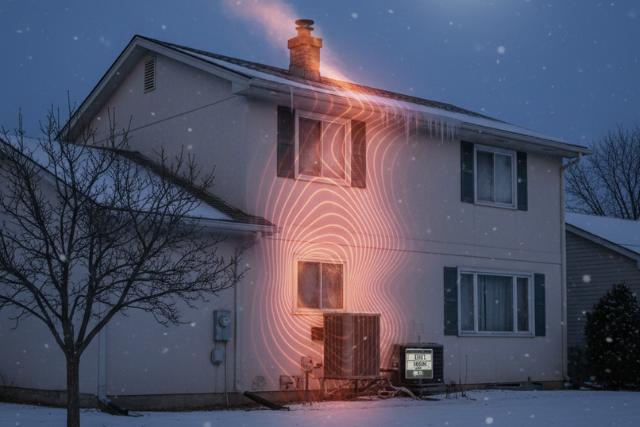
Top Causes of Heat Loss in Your Home
Most homes lose heat through a mix of air leaks, poor insulation, and inefficient windows, but what’s often overlooked is how these factors interact.
Air leaks around windows, doors, attic hatches, plumbing penetrations, and electrical outlets let warm air escape and cold air enter. Old or compressed insulation, especially in attics and crawl spaces, can lose much of its effectiveness over time. Damp insulation makes things worse by conducting heat instead of trapping it.
Even well-insulated walls aren’t immune, heat slips through framing materials like wood or metal studs, a process known as thermal bridging. Meanwhile, up to 30% of heated air can leak out through unsealed HVAC ductwork before it even reaches your rooms.
It’s rarely just “thin insulation.” Homes lose heat because air moves where it shouldn’t, through thousands of tiny, invisible gaps that no one thinks about. Warm air rises and escapes from the top of your house, pulling cold air in from the basement or crawlspace, a circulation failure called the stack effect.
Design choices can make things worse: cathedral ceilings, recessed lighting, and uninsulated chases create thermal “superhighways” that funnel heat outside. Open chimneys, dryer vents, and exhaust fans act like open doors to the outdoors if not properly sealed.
Most heat loss in your home isn’t a product defect, it’s physics and airflow mismanagement. In short, it’s not one single flaw, it’s a combination of small inefficiencies working together to drain warmth, money, and HVAC efficiency.
How to Spot Heat Loss in Home
You can spot heat loss in home through visual, sensory, and performance clues. Uneven temperatures, rooms that are colder or draftier than others, signal uneven insulation or air leaks. If your heating costs rise faster than local utility rates, your home likely isn’t retaining heat efficiently.
Turn off your heat for an hour; if the indoor temperature drops more than 3-4°F, you’re losing heat too quickly. Frost on interior window edges, damp wall corners, or condensation patterns suggest thermal leaks.
A DIY smoke test helps confirm drafts, light an incense stick near windows, outlets, or baseboards; if the smoke moves, there’s air movement. Professional infrared imaging can then pinpoint where heat loss in your home is occurring.
Watch how your house behaves, not just how it feels. If the furnace runs often but rooms still feel cool, it’s likely air leakage or poor duct balance. When the second floor feels tropical while the first feels like a basement, that’s the stack effect in action.
Condensation or musty corners mark cold surfaces where warm air escapes. Even pets or plants gravitating to warmer spots can signal where heat is retained. If your home can’t hold a stable temperature for 24 hours in cold weather, even with a constant thermostat, it’s losing heat faster than it should.
Where Heat Loss in Your Home Happens Most
In most homes, the biggest culprits are the attic and roof, where rising warm air escapes through ceiling cracks, light fixtures, and under-insulated areas; walls, especially exterior ones with old or missing insulation; and windows and doors, which leak even if double-pane seals have failed.
Floors, basements, and rim joists also let cold air seep in through gaps and uninsulated areas, while leaky or uninsulated ductwork wastes heated air before it reaches your rooms.
Most guides say “attic and windows,” which is true but incomplete. Hidden escape routes, like top plates and plumbing chases where walls meet ceilings, basement rim joists between foundation and framing, and unsealed recessed lights or attic hatches, often leak more heat than the obvious spots. Windows and doors look guilty, but they’re usually the symptom, not the main source.
Think of your house like a bucket: if it’s full of small holes, it doesn’t matter how strong your “water source” (furnace) is, it’ll never stay full. That’s why understanding where heat loss in your home occurs is key before trying to fix it.
Best Way to Find Heat Loss in Your Home
The gold standard is a professional energy audit with a blower door test and infrared scan. The blower door depressurizes your home to expose air leaks and measures your home’s “tightness” in air changes per hour (ACH), while the infrared camera shows color-mapped cold spots on walls, ceilings, and floors. That’s the difference between guessing and diagnosing.
If you’re doing it yourself, use an infrared thermometer or a $30 thermal camera attachment for your phone to scan walls and window edges on a cold morning, it’ll reveal glowing patterns of escaping heat.
Walk around on a windy day and feel along outlets, baseboards, and attic doors; if you sense air movement, you’ve found a leak. Check attic insulation depth too, most homes need at least 10-14 inches to meet today’s energy standards.
This combination of pressure testing, thermal imaging, and simple observation gives you the full picture, not just symptoms. That’s how you can find heat loss in home accurately instead of wasting money on random fixes.
Insulation Problems and Heat Loss in Your Home
A lot more than people think. Poor insulation can cause up to 40% higher heating costs and make your home feel uncomfortable no matter how much you run the furnace.
Warm air doesn’t just escape, it forces your heating system to work overtime, shortening its lifespan. In cold climates, upgrading insulation can pay for itself in 2-5 years, depending on your energy rates. Even adding insulation to just your attic can reduce heat loss in home enough to save hundreds per year.
It’s not just about temperature, it’s about thermal lag. A well-insulated home holds heat like a thermos: the furnace runs less often because warmth “coasts” between cycles. Poor insulation shortens that lag, causing the system to restart more often, which adds up to 20-40% more fuel use and accelerates wear.
And here’s what most people miss: insulation that’s installed badly, gaps, compression, or uneven coverage, can perform up to 50% worse than its R-value suggests. The material matters less than the quality of the job. Reducing heat loss in your home starts with checking both insulation quality and air sealing.
Heating Issues Causing Heat Loss in Home
Even the most efficient furnace can’t compensate for poor airflow or unbalanced distribution. Dirty filters or coils restrict airflow and reduce heat output, while leaky or unsealed ducts waste heat before it reaches your rooms, often more than a poorly insulated attic.
Oversized systems heat too quickly, shut off early, and leave cold zones; undersized returns starve the system of air, forcing longer runtimes. Poor zoning or thermostat placement causes uneven temperatures and wasted energy.
If your system runs constantly but rooms still feel cold, the issue could be half insulation, half HVAC performance. Even the smartest thermostat can’t fix bad duct design or airflow imbalance. A technician can test airflow and balance your system to match your home’s needs, helping to minimize heat loss in your home.
How to Reduce Heat Loss in a Home
Start with the highest-impact upgrades first: seal air leaks around windows, doors, attic hatches, and outlets with caulk or weatherstripping, and upgrade insulation, especially in the attic, rim joists, and walls. Air-seal before insulating; adding insulation on top of leaks traps problems, not heat. The biggest difference comes from combining both, one without the other leaves major gaps in performance.
Insulate where it pays back fastest: attic floors, rim joists, and basement ceilings. Add door sweeps, foam gaskets behind outlets on exterior walls, and insulate ductwork in attics or crawl spaces. Maintain your HVAC system, balance your ducts by adjusting dampers or adding returns, and use smart thermostats or vent covers to control heating more efficiently.
Upgrade weatherstripping annually, since it compresses and loses elasticity over time. Install insulated curtains or window films to minimize window heat loss. Every upgrade should be based on a test, not a hunch, the secret to detecting heat loss in your home and fixing it is to treat the house as one connected system, not a patchwork of fixes.
Detecting Heat Loss in Your Home: When to Call a Pro
Call a pro when you’ve already sealed obvious leaks but still have cold rooms, your bills stay high despite upgrades, or you’re planning major energy improvements like new insulation or an HVAC system. It’s also smart before spending big on efficiency projects or when buying or selling a home and needing proof of performance.
A certified energy auditor can run diagnostic tests that reveal what DIY methods can’t, like hidden duct leaks, moisture migration, or underperforming insulation. They can pinpoint issues such as leaks behind drywall or gaps around light cans, giving you data-driven priorities instead of guesswork.
For most homeowners, detecting heat loss in your home professionally pays for itself by helping you invest in the right fixes, not just the obvious ones. A $300-$500 audit often saves thousands by helping you find heat loss in home and fix the real problem first.