AC Repair vs Replacement: How Homeowners Can Make the Right Choice
Air conditioning systems play a crucial role in maintaining comfort inside the home, especially during warm summer months. When an AC unit begins to struggle, homeowners often face a common dilemma: should the system be repaired, or is it time to replace it altogether? While repairs can sometimes restore performance, there are situations where continuing to fix an aging system becomes costly and inefficient.
Understanding when to repair and when to replace your air conditioner can help you avoid unnecessary expenses while ensuring your home remains comfortable and energy efficient. By looking at system lifespan, performance issues, and long-term costs, homeowners can make a confident decision about the future of their cooling system.
Understanding the Difference Between AC Repair and Replacement
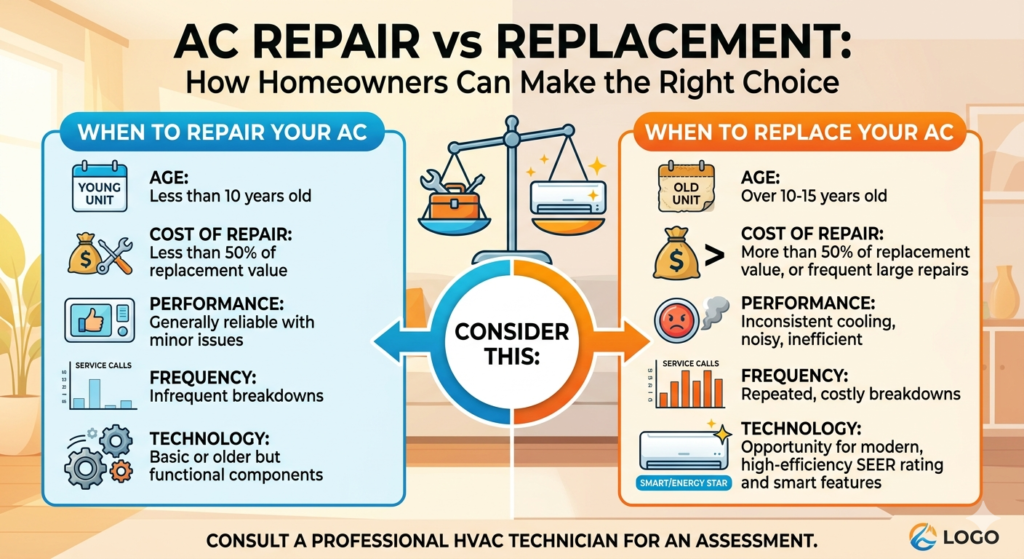
Not every AC issue requires a full system replacement. Many problems can be resolved with routine repairs and maintenance. For example, replacing a faulty capacitor, fixing a refrigerant leak, or repairing a thermostat can restore the unit’s functionality without major expense.
However, some issues signal deeper mechanical wear that simple repairs cannot resolve. When core components such as compressors or evaporator coils begin to fail repeatedly, repairing the system may only offer temporary relief. In these situations, replacing the entire unit may provide better reliability and improved performance.
HVAC technicians typically evaluate several factors before recommending replacement. These include the age of the system, the frequency of past repairs, energy efficiency ratings, and the overall condition of major components.
The Average Lifespan of a Residential Air Conditioner
Air conditioning systems are designed to last for many years, but they do not operate indefinitely. Most central air conditioning units have an average lifespan of 12 to 15 years, depending on usage and maintenance.
Several factors influence how long an AC system will last:
- Regular maintenance and filter changes
- Local climate conditions
- Frequency of use during the year
- Installation quality
- System size relative to the home
A well-maintained unit can often reach the upper end of its lifespan. However, once a system approaches 15 years of service, it may begin to lose efficiency and require more frequent repairs.
At this stage, homeowners often start comparing the cost of ongoing maintenance with the potential benefits of upgrading to a newer system.
Warning Signs Your Air Conditioner May Need Replacement
Certain warning signs can indicate that an air conditioner is nearing the end of its functional life. Recognising these signs early can prevent unexpected breakdowns during the hottest months of the year.
Frequent Breakdowns
If the AC system requires repairs multiple times within a short period, it may be struggling with internal wear. Constant service calls can quickly add up in cost.
Rising Energy Bills
Older air conditioners often lose efficiency over time. When a system must run longer to maintain the desired temperature, electricity usage increases.
Uneven Cooling in the Home
Inconsistent temperatures between rooms can signal declining system performance or inadequate airflow.
Unusual Noises or Odours
Grinding sounds, rattling, or burning smells may indicate mechanical failure or worn components that require immediate attention.
When several of these issues appear together, many homeowners begin researching options such as AC replacement in Gresham, OR to determine whether installing a new system could provide better reliability and efficiency.
Cost Comparison: Repairing vs Replacing an AC Unit
Cost is often the deciding factor when choosing between repair and replacement. While repairing a single issue may appear affordable, repeated repairs over time can exceed the cost of installing a new system.
HVAC professionals often refer to the “50 percent rule.” If the cost of repairing a system approaches half the price of a replacement, upgrading the unit usually becomes the more practical investment.
A newer air conditioning system offers several financial advantages:
- Lower energy consumption
- Fewer repair costs
- Improved cooling performance
- Better temperature control
Homeowners who experience repeated mechanical issues may find that exploring AC replacement in Gresham, OR provides a long-term solution that reduces overall operating costs.
Energy Efficiency and Long-Term Savings
Modern air conditioners are significantly more efficient than units manufactured a decade or more ago. One major factor is the SEER rating (Seasonal Energy Efficiency Ratio), which measures how efficiently a cooling system operates.
Older systems often have SEER ratings around 10 or 12, while modern systems can reach 16 to 20 or higher.
Higher efficiency offers several benefits:
- Reduced electricity consumption
- Lower monthly utility bills
- Improved indoor comfort
- Reduced environmental impact
Upgrading to a modern unit can therefore provide noticeable savings over time, particularly in homes where the air conditioner runs frequently during summer months.
How Professional HVAC Inspections Help You Decide
A professional inspection can provide valuable insight when homeowners are uncertain whether to repair or replace their air conditioner. HVAC technicians evaluate multiple aspects of the system to determine its current condition.
During an inspection, technicians may check:
- Refrigerant levels and pressure
- Compressor health
- Electrical components
- Airflow and duct performance
- Thermostat accuracy
They may also calculate whether the system is properly sized for the home. An undersized or oversized unit can lead to inefficient operation and uneven cooling.
When the system shows signs of significant wear or outdated efficiency levels, specialists may recommend AC replacement in Gresham, OR, to ensure reliable cooling and improved energy performance.
Practical Tips for Homeowners Facing an AC Decision
Making the right decision between repair and replacement requires careful evaluation. Homeowners can take several steps to make the process easier.
Keep track of repair history
Frequent repairs often signal that the system is approaching the end of its life.
Compare repair costs with replacement estimates
Understanding the long-term financial impact helps clarify which option is more cost-effective.
Review your energy bills
A steady increase in electricity costs may indicate declining system efficiency.
Consider the age of your system
If the unit is more than 12–15 years old, replacement may soon become unavoidable.
Consult experienced HVAC professionals
Expert guidance ensures homeowners make informed decisions based on system condition and home cooling needs.
Conclusion
Deciding between repairing and replacing an air conditioner is a significant choice for any homeowner. While repairs can resolve short-term issues, aging systems often become less efficient and more expensive to maintain over time.
By considering factors such as system lifespan, repair frequency, and energy efficiency, homeowners can determine whether replacement offers greater long-term value.
A reliable cooling system not only improves indoor comfort but also helps control energy costs and prevent unexpected breakdowns. Taking the time to evaluate your system carefully ensures that your home remains comfortable and efficient for many summers to come.