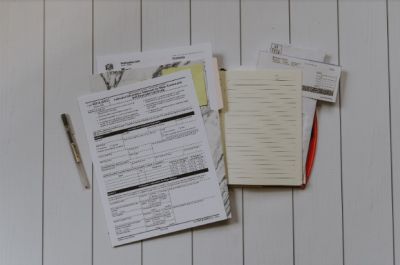
If you’re self-employed or own your own small business, tax time can be stressful, but it doesn’t have to be. There are some extra steps you have to follow if you consider yourself an independent contractor or business owner than if you’re an employee.
Filing your taxes is something you should be preparing for all year by saving all the correct documents. If you’re organized and ready to submit, there are some things to remember.
We’ll go over all you need to know if you’re filing taxes for your business or are self-employed.
#1 Fill Out the Correct Form
For small businesses or self-employment, different types of tax forms must be filled out. In Canada, which type to complete depends on your business structure. To ensure your business is compliant, read an Ontario small business tax rate guide that can provide more information about how to calculate and file a business tax return.
In the case that you co-own a place and have a partnership, you can fill out the business’s income on a T1 personal income form for taxes. However, when you are the only owner, there’s a different form. You will also need to fill out a T2125 Form.
You can file your taxes online through software. Also, you can complete the form in person and mail it in. If you want to be 100% accurate, then you can always use an accountant, who is an expert in Tax Law Canada.
You want to make sure that you fill out the forms correctly to avoid getting audited or be accused of tax evasion. If you are questioned by Canadian officials, it could be a lot of extra work and expenses, and overall hurt your small business.
#2 Deductible Costs
There are a lot of things you can legally deduct from your taxes. Anything that’s needed or assists you in performing your job is considered deductable.
When your business is mostly run online, you can deduct some of your internet costs. Also, if a phone is used a lot for business purposes, you can subtract some of your phone bill costs. When you have to travel a lot for work with your car, gas, mileage, oil changes, and other maintenance expenses can be written off.
Any equipment such as a computer, printer, scanner, or job-specific tools, as well as trucks and safety equipment, is all deductable. Licenses or permits that are required to keep your business running legally can be taken off. Also, in the case that you have travel expenses like hotels, renting a car, airplane rides, or meals for work purposes, these can be subtracted as well.
The most important thing when it comes to deductions is keeping all records and receipts of transactions. If you don’t have the record, it can’t be subtracted. When you do write things off that are undocumented, it’s possible you will get audited and fined.
#3 Your Employees
When your small business has employees, there are taxes you have to pay for them, and also, they must pay taxes. This is called payroll tax, which is your responsibility as the employer to take out of their paychecks.
Along with federal income tax, you can withhold other funds as well. Some things that can be taken out of their paycheck is health care, life insurance, state income tax, retirement savings, and union dues.
These will be determined when your employee begins work and fills out the tax form.
The Bottom Line
Owning your own business can be a great way to make an income and do what you love. Many people like the idea of being their own boss, which requires some extra work.
You don’t want to have legal issues when it comes to filing taxes, so it’s essential to understand fully what you need to do and what can be subtracted. It’s always a good idea to ask a professional if you’re feeling confused or stressed about filing.
When you keep in mind all these things to know about taxes for small businesses, you’ll be on the right track to the filing on time and correctly!
What is the Trump Tax Plan? One of the campaign promises by President Donald Trump was the Trump Tax Reform that he introduced once he won the election. One year after he won the 2016 United States presidential election, President Donald Trump signed the tax plan. The new tax law changes under the Trump Administration…
If you have a property, your posterior generations must have the right to it. The rules of preserving property can be different based on the country and system of governance. Do you have prosperity in Dubai? Then, you will have to take quick steps to secure it for your coming generation. Dubai has its distinctive…
Adopting early retirement sets off a special path of financial emancipation and life change. Strong choices are mixed with careful preparation to encourage a proactive attitude toward future comfort. Creative budgeting methods, wise investments, and controlled spending combine to create a strong strategy that maintains a happy life and releases the spirit from traditional job…
There comes a time when a country’s government may decide to change the money in use. This may be due to reasons like improving security measures, dealing with counterfeit, corruption, and inflation among others. Just imagine a scenario where the currency is declared obsolete and the government says that you cannot use the money you…
Not having enough money can become all-consuming. When we start to worry about not being able to cover our bills or defaulting on the mortgage, our lives begin to revolve around money, whether getting more of it or how to stop spending so much of it. Financial struggles affect millions of Americans, with only 28%…
#1 Understanding Money Money is at the heart of our modern economy. Ever since human beings started forming strong cohesive societies, there has been a need for money. Money allows us to trade value in every form. It allows us to trade our goods and resources to one another without even thinking about the medium…